
I am frequently asked how I drill all the holes in my freight car kits. I’ve made mention in past posts that I use motorized drills to make easy work of the tasks. I guess it’s time to feature those tools.
Continue reading “Motorized drills”Notes on Designing, Building, and Operating Model Railroads
A hobby adventure
I am frequently asked how I drill all the holes in my freight car kits. I’ve made mention in past posts that I use motorized drills to make easy work of the tasks. I guess it’s time to feature those tools.
Continue reading “Motorized drills”
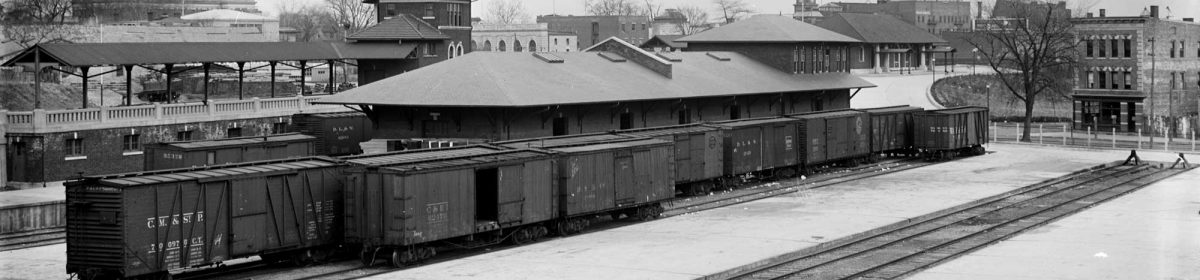
As I started an HO scale resin freight car kit, I noticed something odd about the grab irons. The drop portion of the grab iron wasn’t at a right angle to the legs of the wire detail part. When I look at a prototype photo like the one above. I see drop grab irons at right angles.
Continue reading “Being picky”
I use a camera to document lots of model work. My iPhone is typically used at the workbench to capture details during a build but I also like to snap photos with my DSLR to document stages of construction. It’s more of an official company photographer act. This post leads with a photo of my studio set up in the garage. I keep it simple.
Continue reading “Photography”
Contact cement has been used as an adhesive for decades. One of the most common is rubber cement. I recall using rubber cement to assemble plastic dinosaur models in the late 1960s. The eight-year-old modeler did not do a neat job at all. Walthers Goo and Ambroid cements are also contact cements. I had poor experiences with those when assembling models in the 1980s. In each case, I don’t think I was using the adhesives properly.
Continue reading “Contact cement”
I picked up a drill press stand for my vintage 1970s era Dremel Moto-Tool a couple of months ago. I found one at a decent price on EBay and bought it to do a better job on the bolster holes. I had used the Dremel for this task previously in a free-hand mode, but some holes were drilled at a slight angle introducing a slight lean to completed models. I needed to do better.